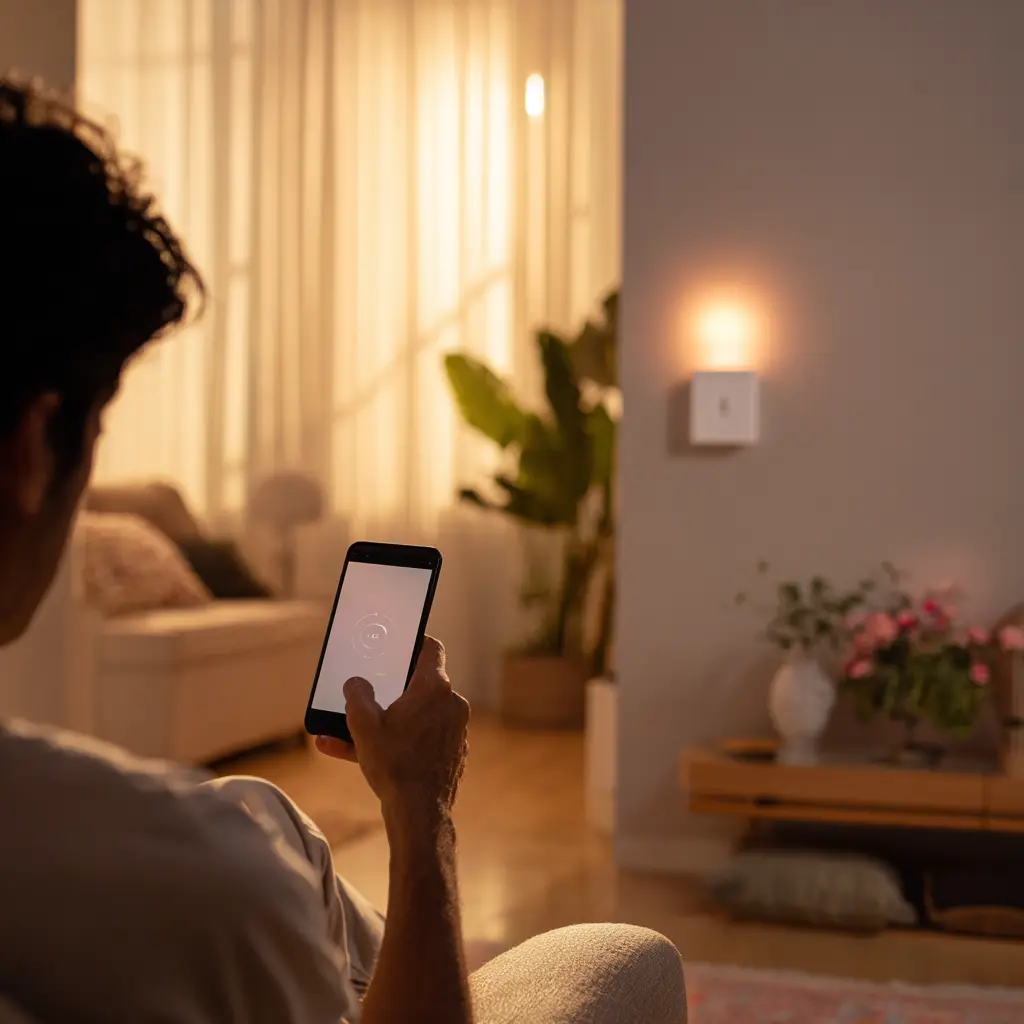
What Is a Smart Home, Really?
A smart home isn’t just about gadgets or fancy lights — it’s about convenience, control, and connection.
Through Wi-Fi-enabled devices, you can automate everyday tasks — from turning on lights to locking doors, managing appliances, and even monitoring your home from anywhere in the world.
Think of it as giving your home a brain that learns your habits and makes life smoother.
Step 1: Start with the Essentials
If you’re new to smart living, begin with a few core devices that make an instant impact.
Smart Plugs: Turn regular appliances — lamps, fans, or geysers — into smart ones.
Smart Lights: Set the mood with voice-controlled or scheduled lighting.
Smart Door Locks: Enjoy keyless entry with fingerprint or PIN access.
Smart Bells or Cameras: See and speak to visitors from your phone, wherever you are.
These are simple, affordable entry points that instantly upgrade your living experience.
Step 2: Choose Your Control System
Smart devices need a hub or ecosystem to work together smoothly.
Most brands today support major platforms like:
- Google Home
- Amazon Alexa
- Apple HomeKit
Pick one that matches your smartphone or existing devices. You can even mix and match, as long as the products are compatible.
Step 3: Automate Daily Routines
Once your basics are set, explore automation — where your devices respond automatically to time, motion, or voice.
Try simple routines like:
- Turning on lights at sunset.
- Heating water automatically before your morning shower.
- Locking doors and powering down devices when you say “Good night.”
Automation adds rhythm to your day — so your home quietly takes care of itself.
Step 4: Focus on Security and Safety
A smart home isn’t just about comfort — it’s also about peace of mind.
Install smart locks, motion sensors, or security cameras that send real-time alerts to your phone.
Some even let you grant temporary access to guests or monitor deliveries while you’re away.
Safety becomes effortless when it’s integrated into your daily life.
Step 5: Save Energy and Live Sustainably
Smart technology can help you reduce waste and save electricity.
Set devices to switch off automatically when not in use, monitor energy consumption through apps, and schedule appliances to run efficiently.
It’s good for your bills — and for the planet.
Step 6: Expand Gradually
You don’t need to buy everything at once.
Start small, observe how automation fits into your routine, and build layer by layer.
Add smart curtains, thermostats, or voice-activated scenes as your comfort grows.
The goal isn’t a futuristic setup overnight — it’s a smarter version of your everyday life.
Final Thoughts
Building your first smart home is easier than it looks.
All it takes is curiosity, a few well-chosen devices, and the willingness to experiment.
As you add more automation, you’ll notice that your home begins to adapt to you — your habits, your timing, your lifestyle.
And that’s what smart living is truly about.